Shared Reality Design
Do several interests need to be aligned, or do you need to find common ground between different perspectives for a change?
What is it?
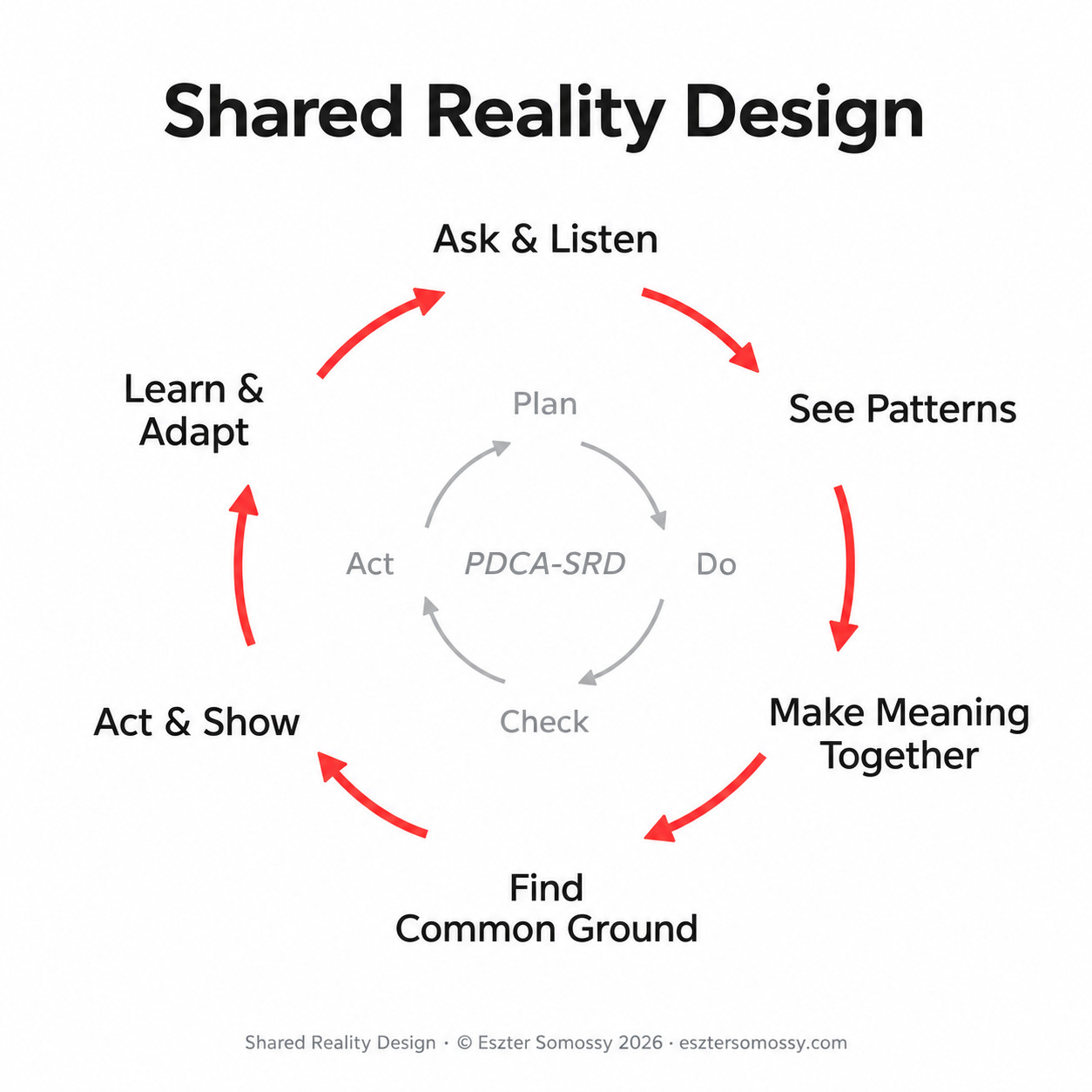
Shared Reality Design is my own methodology, developed in practice. With it, I help change grow from within the organization. We work with what is already there: the organization’s human intelligence, its strengths, and people’s different lived realities and experiences.
The AI Insight Explorer I developed surfaces, based on evidence, the patterns, intersections and differences in what people share. This helps us understand more precisely what the same change means for different stakeholders, what they need in order to contribute, and where there is enough common ground to move forward.
What does it make possible?
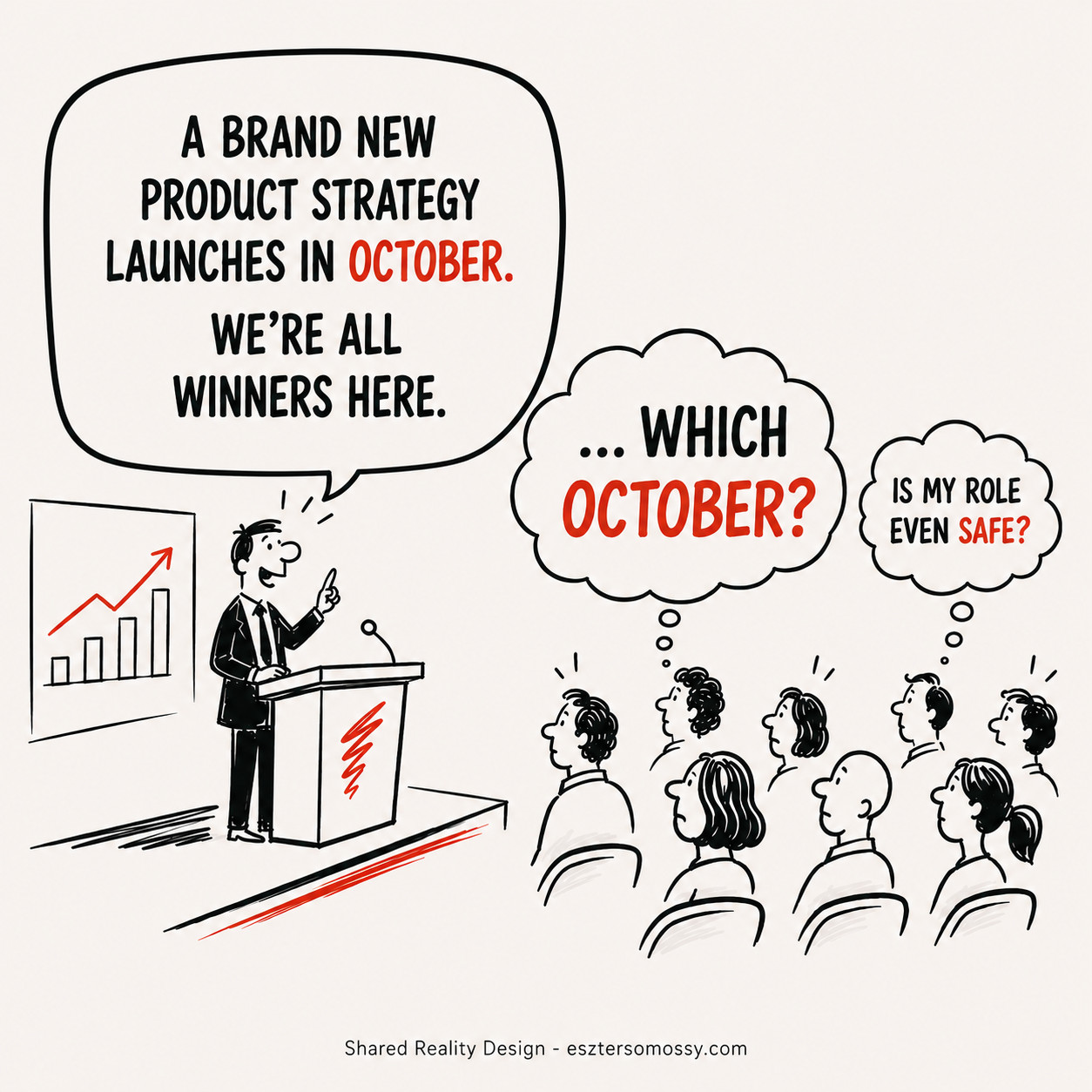
A change can mean something different to a leader, an expert, another department, a partner or a customer.
When we understand each other’s lived reality more precisely, we also understand better what the change means in our own work, why it matters, what we need for it, and how we can contribute.
From this we can create enough common ground to align our decisions and actions, show what value we have created, and keep learning from new experience.
Through SRD, the organization also learns this way of working, so it can later use and develop it on its own.
AI helps discover a community’s human intelligence. Shared meaning and shared reality are created by people.
How it works in practice
Try the SRD AI Insight Explorer: ask directly about the results of a real survey (the data and the agent are in Hungarian).
SF Org Designers + Coaches Joint Alumni Professional Day
In September 2026, with members of the SolutionSurfers Hungary Coach and Go Beyond DO!Go! OrgDesigners alumni communities, we explored how they experience the change brought by AI in their profession, and what value collaboration between the two communities could create for them.
We explored the participants’ anonymous responses with the SRD AI Insight Explorer: where perspectives meet and differ, which needs and opportunities emerge, and what can be built on together.
The AI tool works only with data from responses submitted to the anonymous survey.
View the surveySometimes you need to wait for the answer even if nothing seems to happen. Please wait and don’t click elsewhere.
Shared Reality Design – Adaptive workshop methodology
This is the learning and capability development methodology that I continuously develop and refine. It is the organizing principle of my training architecture and my workshops.
Details
It is built on three mutually reinforcing pillars:
The Shared Reality Design workshop methodology is an engaging, experience-based, adaptive learning approach built on three mutually reinforcing pillars:
- 1
Experiential and community learning
Participants work on their own situations, building on each other’s knowledge and experience. Learning happens through exploration, dialogue, practice, experimentation and reflection.
- 2
Agile, adaptive development model
We plan learning around goals, a development roadmap, milestones and minimum valuable learning units. We move in short, iterative cycles with regular feedback and evaluation. We continuously shape priorities, learning content and next steps based on experience.
- 3
Application in real situations
Participants work on their own professional and organizational challenges. They try out what they learn in real situations, observe the results, and plan their next steps based on them.
We work with two interconnected learning cycles: within the workshops, the Hook → Discipline → Explore → Move → Conclusion experiential learning cycle*, and between the workshops and practical application, the Plan → Implement → Evaluate → Adapt agile cycle.
AI supports exploration, practice and reflection, while interpretation and decisions remain a human responsibility.
The goal: usable capabilities, observable progress and continuous value creation.
- Adjusting the emphases of the learning cycles
- Adapting practices and tools
- Defining the next steps
Continuous feedback and adaptation
* Note: I learned the Hook → Discipline → Explore → Move → Conclusion experiential learning cycle from the training approach of Every Generation Ministries (EGM).